How long does cluster feeding last, especially at night?
How long does cluster feeding last? What frequent evening feeds can look like, how to follow your baby’s cues, and when to ask for feeding support.
Martynas · 12 August 2026

She fed. You put everything away. Ten minutes later, she is rooting again as if the first feed never happened. If you are searching how long does cluster feeding last while the clock moves past midnight, the NHS does not give a minute limit for one cluster. There is a wider pattern, though, and there are clear signs that tell you whether to keep following her lead or call someone.
How long does cluster feeding last?
Cluster feeding means a baby wants to feed much more frequently than usual over a stretch of time. One feed may seem to run into the next, with only a short pause for a nappy, a cuddle or a doze. The NHS describes it as normal during the first 3 to 4 months and says it can happen in the day, at night, or both.
That gives you the useful answer in three parts:
- The NHS does not set a minute limit for one cluster. It advises following hunger and fullness cues instead of trying to make the feed fit a timer.
- A short phase may run for a few days. The NHS says some babies cluster feed for a few days during a growth spurt, but that is not a deadline every baby follows.
- The pattern is most common early on. It usually happens in the first 3 to 4 months. It does not have to stop on the day she reaches four months.
Frequent feeding by itself does not tell you that something is wrong. It also does not prove that everything is fine. The more useful checks are whether she is swallowing, whether feeds seem comfortable, whether her nappies are as expected for her age, whether she is alert when awake, and whether her weight is moving as her healthcare team expects.
How long does cluster feeding last at night?
The NHS gives no separate minute range for night-time clusters. A cluster might take up part of an evening, return after a pause, or spill into the early hours. The same NHS guidance says cluster feeding can happen at night, and its responsive-feeding guidance says a larger feed does not guarantee a longer gap before the next one.
That last point matters. Trying to persuade a baby to take more in the hope of buying more sleep can override the signs that she has had enough. With a bottle, turning away, stopping sucking, spilling milk or pushing the teat away are reasons to pause or stop. She does not need to finish what is left.
Night clusters can also feel longer because there is no ordinary evening around them. There is only the feed, the small pause, and the next cue. If two parents are available, split the work that can be split. One feeds. The other brings water, handles the nappy, washes the bottle or records the time. It does not halve the feeding, but it stops one person from holding the whole night in their head.
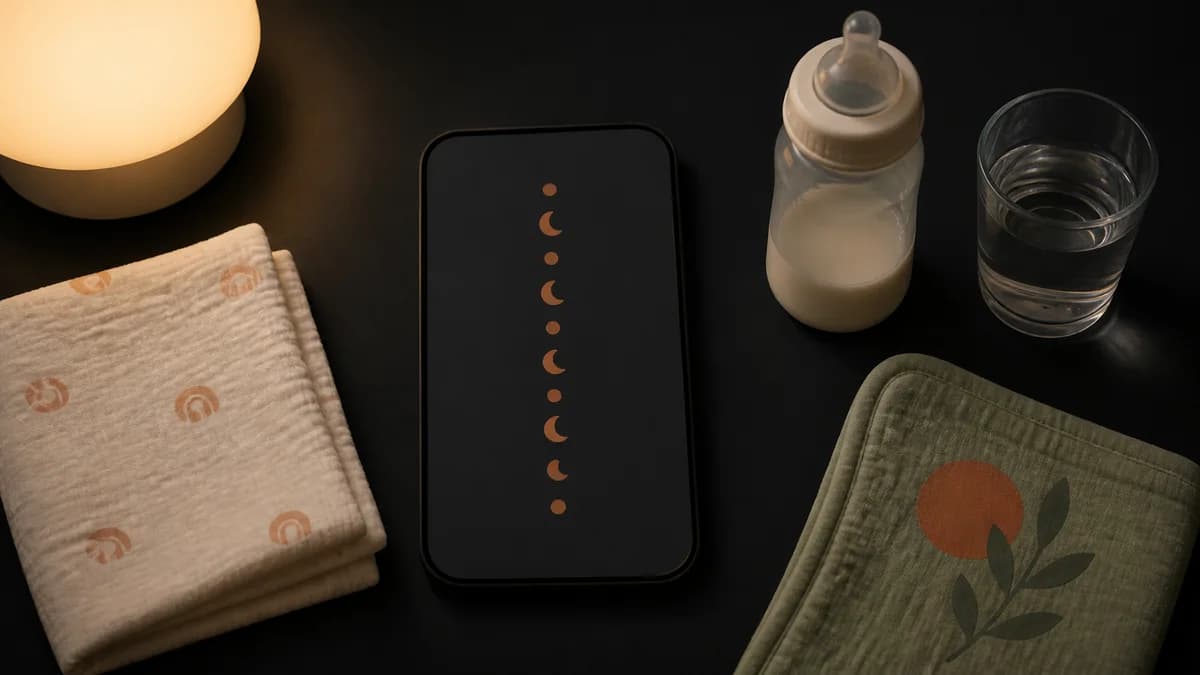
🦘 Buma keeps breast and bottle feeds in one shared history, so the parent taking over can see when the last one ended without waking anyone to ask. Get Buma →
What cluster feeding looks like
The clock is not the definition. Your baby’s behaviour is.
Early hunger cues can include bringing her hands to her mouth, turning towards the breast or bottle, smacking her lips and clenching her hands. Crying is often a later cue. Fullness can look like closing her mouth, turning her head away and relaxing her hands. Those are the CDC’s hunger and fullness cues for babies from birth to 5 months.
During a cluster, you might see a run like this: she cues, feeds, slows or stops, rests briefly, then cues again. That can repeat. The gaps may be so short that calling each one a separate feed feels artificial. You do not need to settle the naming question at 02:00. Record what is useful, then follow her cues.
Not every unsettled spell is hunger. In its bottle-feeding guidance, the NHS notes that hunger is less likely when a baby has fed recently. Renewed rooting or active sucking cues can still mean she wants another feed, so look at the whole picture. Turning away and a relaxed body point towards a break.
Breast and bottle cluster feeding are not identical
A breastfed baby may come back to the breast often and stay for different lengths of time. Rather than judging the feed by minutes, look and listen for rhythmic sucking and swallowing. The NHS lists visible or audible swallowing, rounded cheeks during sucking, a relaxed baby during feeds, and coming off the breast herself among the signs that breastfeeding is going well.
Pain is not something you have to quietly absorb because feeding is frequent. If your nipples come out flattened, pinched or white, feeds stay painful, or you cannot tell whether she is swallowing, ask a midwife, health visitor or breastfeeding specialist to watch a feed. Small changes in attachment are easier to work through with someone who can see what is happening.
Formula-fed babies can cluster feed too. With a bottle, responsive feeding matters because milk can continue to flow even when a baby needs a pause. The NHS recommends feeding to cues, keeping the bottle almost horizontal, allowing rests and never forcing a baby to finish. There is no target volume for a cluster in this article because the right amount depends on your baby and her clinical context.
How to make a cluster-feeding evening more manageable
You cannot organise a baby into a feeding schedule she is not following. You can organise the space around the feed.
Put water, a snack, a muslin and a phone charger within reach before the evening gets busy. If you are breastfeeding, choose a position that is comfortable and keeps you awake. If you are bottle feeding, prepare and store milk according to the instructions for the milk you use. Do not prop a bottle or leave her feeding alone.
Keep the handover plain. “She fed from the left at 20:10, had a wet nappy, then took a small bottle at 21:00” is more useful than “she has been feeding all evening”. A shared log helps when both parents are tired because nobody has to reconstruct the order from used bottles and half-remembered times.
You also do not have to make the night productive. The aim is not to earn a calmer tomorrow. It is to get through this feed, then the next decision.
When she sleeps, return her to a safe sleep space. NHS safer-sleep guidance says babies should be placed on their back on a firm, flat mattress in a clear, separate cot or Moses basket in the same room as you for at least the first 6 months. Do not sleep with a baby on a sofa or armchair. Cluster feeding makes adults very tired. Plan the handover before you reach the point where you might drift off.
How to know frequent feeding is still going well
The number of feeds is only one part of the record. Watch the baby, the milk transfer and the nappies together.
For breastfeeding, reassuring signs include deep rhythmic sucks and swallows, a relaxed face and body, softer breasts after feeds, and a nipple that is not pinched or blanched afterwards. The NHS also points to steady weight gain after the first few days and a baby who appears healthy and alert when awake.
Nappies give you another check. We have a separate guide to how many wet and dirty nappies are expected by age. The key early figure from the NHS is at least 6 heavy, wet nappies every 24 hours from day 5 onwards; the first days have lower expected counts, so use the age-specific guidance rather than applying the day-5 number from birth.
One very busy evening does not need to look like the next. If you log feeds, use the record to answer concrete questions: when the pattern started, which feeds had active swallowing, how many wet nappies followed, and whether she settled between some feeds. Do not turn it into a score. There is nothing to catch up on.
When to ask someone
Call your midwife, health visitor, GP or paediatrician if cluster feeding comes with fewer wet nappies than expected for her age, if you cannot see or hear swallowing, or if breastfeeding stays painful or damages your nipples. These are covered by the NHS guidance on whether a breastfed baby is getting enough milk. A baby who is sleepy and hard to wake also needs prompt feeding support rather than waiting for the cluster to pass.
In the UK, call NHS 111 when you need urgent advice and your usual team is unavailable. Call 999 if your baby will not wake, is struggling to breathe, stops breathing, or is limp or unresponsive. You do not need to decide whether the feeding pattern has an ordinary explanation before asking someone to assess her.
Questions parents ask
How long does each cluster feed last?
The NHS does not give a minute range for one cluster. Feed responsively and use her hunger, pause and fullness cues rather than a stopwatch. If she stops sucking, turns away, closes her mouth or relaxes her hands, give her the break she is asking for.
At what age does cluster feeding stop?
The NHS says cluster feeding usually happens in the first 3 to 4 months. “Usually” is not a cut-off. If frequent feeding continues beyond that and you are unsure whether she is transferring enough milk or growing as expected, take the question to your health visitor, GP or paediatrician.
Can a formula-fed baby cluster feed?
Yes. The NHS explicitly says formula-fed babies can cluster feed. Follow hunger and fullness cues, allow pauses, and do not pressure her to finish a bottle. Ask your healthcare professional about her intake if you are concerned rather than changing volumes or concentration on your own.
Does cluster feeding mean my milk supply is low?
Not on its own. Frequent feeding can be a normal early pattern. Check it alongside swallowing, comfort, age-appropriate wet and dirty nappies, alertness and weight. If those signs are not reassuring, or you simply feel something is off, ask for a feeding assessment.
Will cluster feeding make my baby sleep longer?
Do not count on it. The NHS says a big feed does not mean a baby will go longer between feeds, and night feeds are likely during the first few months. Follow her cues at the next waking rather than trying to load more milk into the previous feed.
Take the cluster one cue at a time
So, how long does cluster feeding last? The NHS does not give a minute endpoint for one cluster. The pattern is most common in the first 3 to 4 months, but the useful end point is your baby showing that she is finished. Watch the cues. Check the nappies. Ask for help when the rest of the picture does not look right.
The evening may still be long. You have not caused that, and you do not have to make it look tidy.
Buma is a record-keeping app, not a medical device, and nothing here is medical advice. For anything that worries you, talk to your health visitor, GP or paediatrician.
Keep one feeding record together
Cluster feeding is easier to hand over when the last feed, the bottle, the breast and the nappy are already written down. Both parents can read the same timeline instead of comparing two versions of the night.
Buma is a baby journal for iPhone and Android that both parents write in — one invite code, one history, every entry stamped with who logged it. Get Buma on the App Store or Google Play.
Sources
- Cluster feeding — NHS Best Start in Life, 2023
- Feeding on demand — NHS Best Start in Life, 2023
- Breastfeeding: is my baby getting enough milk? — NHS, 2026
- Signs your child is hungry or full — Centers for Disease Control and Prevention, 2026